Health
Content

Versatility

Recipes
Recipes for every day
Simple preparation, accessible ingredients and the Bravo avocado at the centre. Choose a recipe and open the step-by-step guide.
View recipeHealth

Guilt-free pleasure: the science behind avocado
Everyone has heard that avocado is healthy. But “healthy” has become such a label cliché that it has almost lost its meaning. So let’s get to the point: there is serious science behind it, and it is worth understanding why.
Start with the heart. Most of the fat in avocado is monounsaturated, and a controlled study of 45 adults, published in the Journal of the American Heart Association (2019), showed that a diet with avocado significantly reduced LDL (“bad cholesterol”) compared with a diet without the fruit. Another Harvard study of more than 110,000 people over 30 years, also in JAHA (2022), went further: people who eat avocado 2 times a week or more have a 16% lower cardiovascular risk. Add potassium to that: avocado has more than a banana, and you have a direct ally for your heart and blood pressure.
There is more: researchers at the Illinois Institute of Technology tested avocado at breakfast and published their findings in Nutrients (2019). Those who ate avocado felt significantly less hunger and 25% more satiety than those who ate a breakfast without the fruit, with insulin 31% lower after the meal. The explanation is simple: fibre and good fat together hold off appetite for longer. Half an avocado already provides around 7g of fibre (Cleveland Clinic), which also helps regulate the gut and blood sugar.
And the nutritional package does not stop at the heart and satiety. A scientific review published in Nutrients (2021) confirmed nearly 20 vitamins, minerals and phytonutrients in a single fruit.
Guilt-free pleasure is real. The avocado is perfect: BRAVO!
Referenced studies
Know the fruit
Hass is not abacate
They look related, and they are. But one does not replace the other. Hass is smaller, with pebbly skin that darkens as it ripens and creamy, buttery flesh. Abacate, the avocado most Brazilians grow up with, is larger, with smooth skin and more watery flesh, made for sweet smoothies. Hass shines in savoury food: on toast, in salads, in guacamole.

How to ripen
Just ripe
A perfectly ripe Bravo avocado is worth the wait.

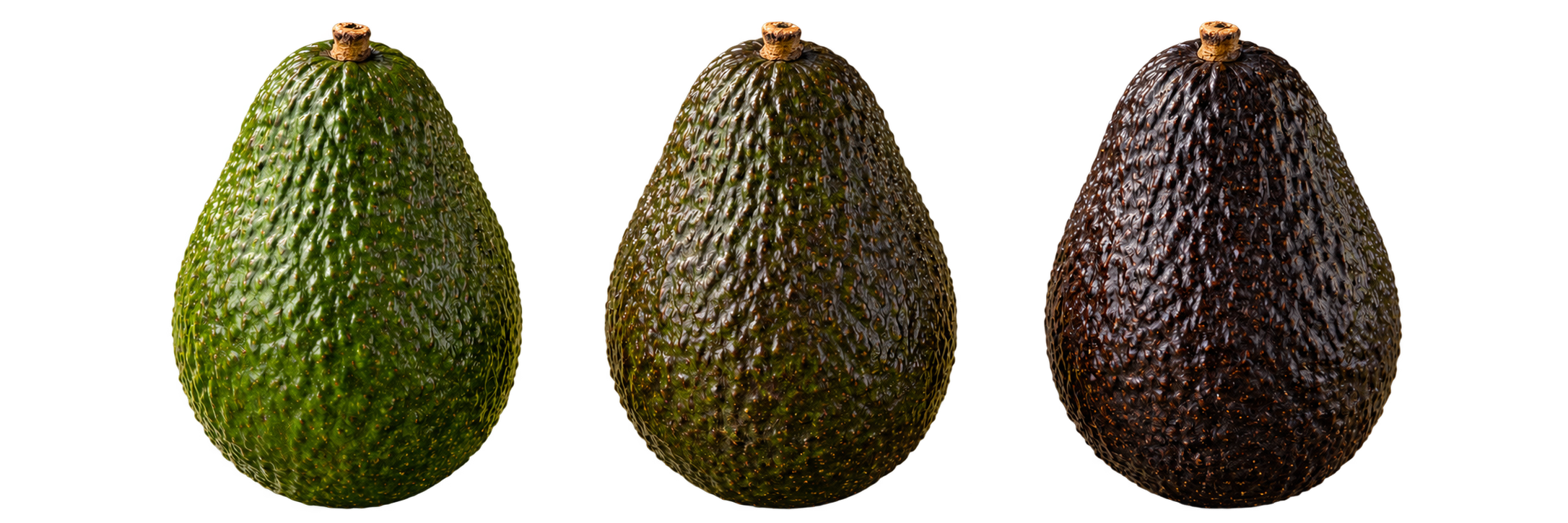
Green and firm. Not yet.
Keep it at room temperature; it will be ready in about 7 days.
Dark green. Almost there.
It gives slightly at the ends. 2 to 3 more days.
Almost black. Ready.
It yields to gentle pressure. Enjoy it today or keep it in the fridge for later.
Three ways to begin
Recipes for every day
Simple preparation, accessible ingredients and the Bravo avocado at the centre. Choose a recipe and open the step-by-step guide.

- Always ripe, always fresh, always on time.